






- 17 Jul
- 2025
RAU Summarizes Results of the Second Cycle of the Course Fundamentals of Project Activities
The curriculum aims to develop students’ practical skills in project-based thinking and teamwork through solving real-world tasks.
The Russian-Armenian University has completed the second cycle of the course Fundamentals of Project Activities, implemented jointly with Peter the Great St. Petersburg Polytechnic University (SPbPU). The curriculum aims to develop students’ practical skills in project-based thinking and teamwork through solving real-world tasks.
The second launch of the course at RAU marked a significant step forward compared to the previous year. According to Inna Seledtsova, senior lecturer at the Higher School of Project Activity and Industrial Innovation of SPbPU, the 2025 results have shown substantial progress.
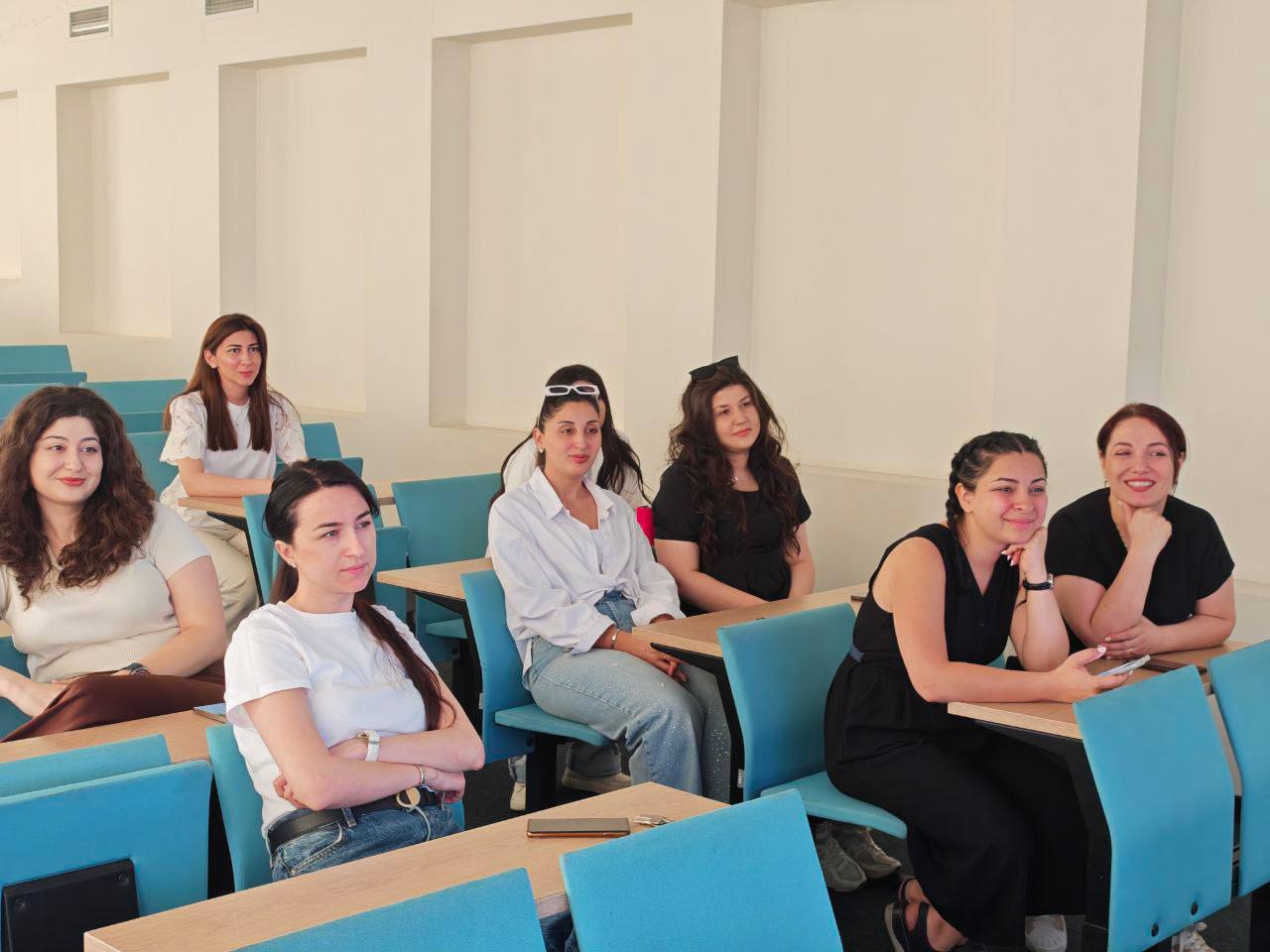 “Even during the pilot year, we were satisfied with the outcomes, but now we can confidently state that the progress is evident. Both the number of students and the number of projects have increased. This year there have been20 projects: all have reached the final defense stage, and 17 have achieved excellent results. We are truly proud of our students. What’s especially encouraging is that this year we have also had projects from external partners. For instance, students have explored the tourism market in Armenia: they have interviewed tourists, identified real problems, and proposed viable solutions. It hasn’t just been an academic exercise, but work in a dynamic environment that requires considering the interests of businesses, government, and consumers alike. Such experience is invaluable,” she emphasized.
Beyond quantitative achievements, lecturers also highlight qualitative improvement in student engagement. In several departments, the course has become mandatory, which has increased not only participation but also motivation. Students have begun to approach their tasks more seriously, delving deeper into the material and actively applying the tools they have learned.
According to Anton Ambrazhay, senior research fellow at the International Academic Competence Center Technologies of Intelligent Enterprise of SPbPU, the course plays an important role in helping students adapt both to university life and to their future professional environment.
“The course gives students an opportunity to engage in real activities, not yet professional, but as close as possible. This happens in a safe environment where mistakes are not punished but rather discussed and supported. Students can try themselves in different roles, as performers, organizers, and team members. They learn to use simple yet effective project management tools and apply them in practice. And, of course, the project is unique in its scale, with over 4,500 students participating annually, resulting in up to 700 projects each year. Managing such a scope is a serious challenge, but also a tremendous opportunity for development,” he noted.
Based on expert evaluation, the winning project was Assessment of Education Quality by Students of the Institute of Economics and Business, developed by students majoring in Management under the supervision of senior manager of the Department of Economics and Finance Iveta Stepanyan.
The Second prize went to the project Cultural and Educational Event ‘Russian Language Day’, supervised by associate professor of the Department of Russian Language and Professional Communication Liana Petrosyan.
The project Green Tourism, carried out under the supervision of Lolita Tashyan, senior manager for Part-Time Studies at the Institute of Economics and Business, got the third prize.
During the official award ceremony, the winning teams received diplomas, while their mentors were presented with letters of appreciation from RAU and SPbPU for their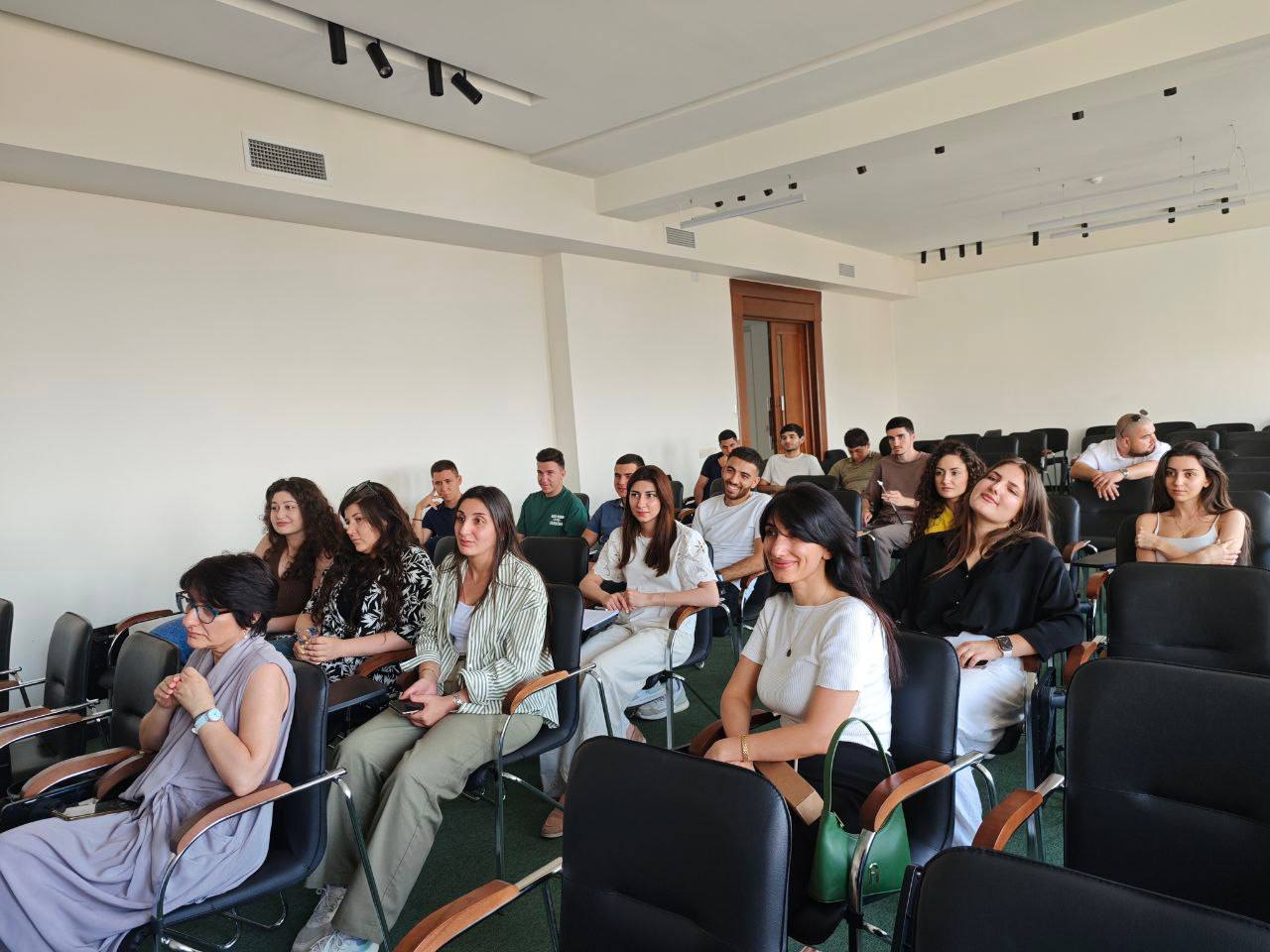 contribution to fostering project culture at the university.
contribution to fostering project culture at the university.
Participants noted that working on their projects was both valuable and challenging. Elen Khachatryan, a Management student and member of the winning team, shared her impressions: “The most difficult stage was implementation. We needed to find a balance between the client’s interests and convenience for students. It was important to design a clear and engaging survey interface and at the same time obtain accurate and illustrative data. Our mentor, Iveta Stepanyan, provided great support at every stage. Thanks to her involvement, we maintained motivation and a high level of engagement. This project allowed us to view the university from a new perspective. We realized how differently students perceive the same aspects of the learning environment depending on their year, department, and experience. It gave us not only a fresh outlook but also valuable analytical insights.”
The project evaluation commission included Anton Ambrazhay, senior research fellow at the International Academic Competence Center Technologies of Intelligent Enterprise of SPbPU; Inna Seledtsova, senior lecturer at the Higher School of Project Activity and Industrial Innovation of SPbPU and Ruzanna Ayrapetyan, Head of Department of Educational Policy and Quality Control of Education at RAU.
Following the evaluation, a working meeting was held between the project mentors and RAU Vice-Rector for Academic Affairs Marina Khachatryan, during which the course outcomes were discussed and directions for further collaboration were outlined.
Translated by Lyudmila Manucharyan
Latest News
-
16 September , 2026
-
09 September , 2026
-
04 September , 2026